It tracks your expenses,
so money doesn't track you.
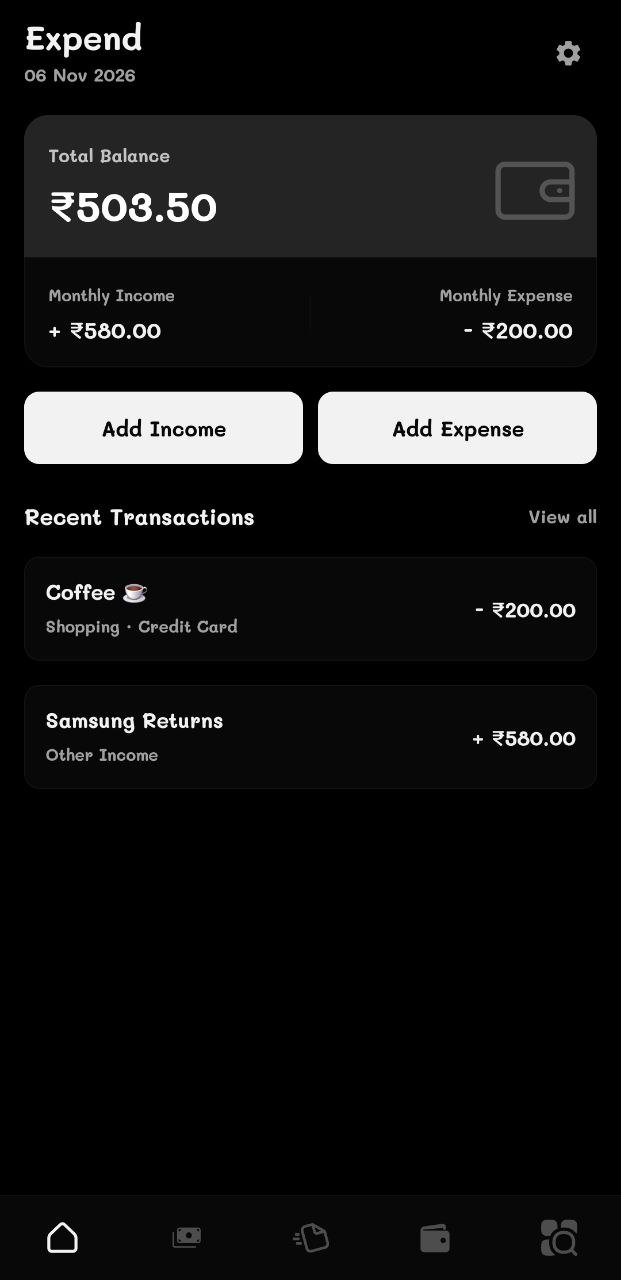
An offline-first, quiet personal finance tracker. Keep track of credit cards, multi-wallet balances, and recurring expenses without third-party tracking, ads, or cloudy syncing. Everything stays on your phone.
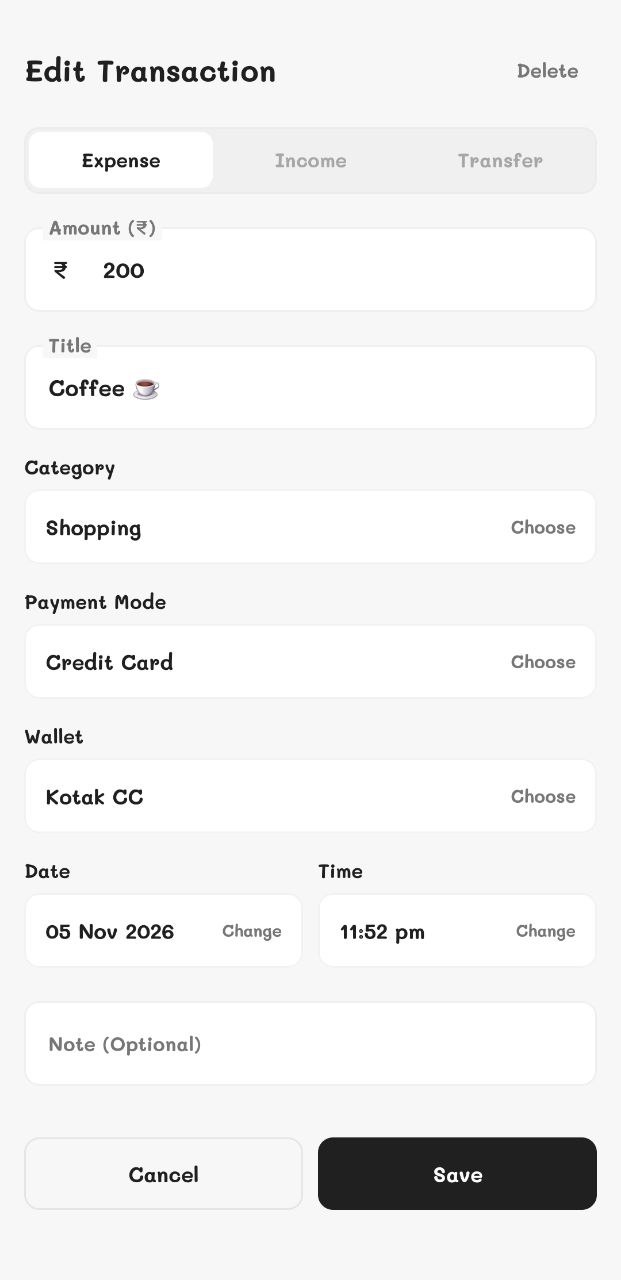
Scattered across too many places
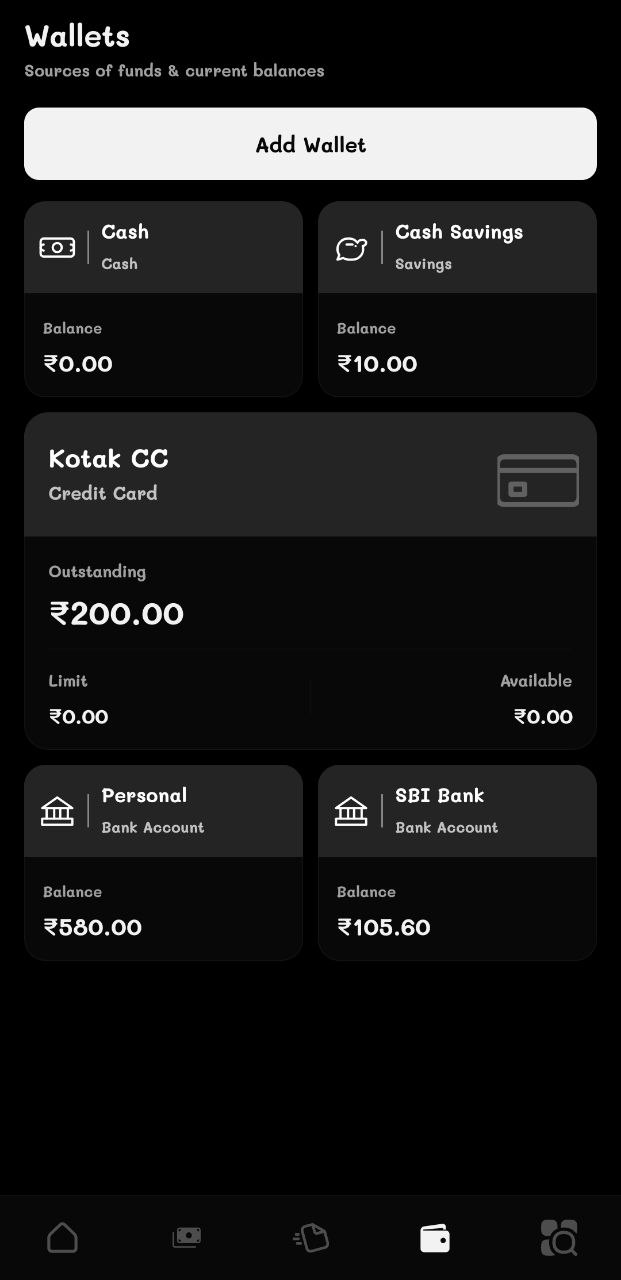
Credit cards bury liabilities in statement cycles. Bank accounts scatter cash across three different apps. You open multiple banking portals just to figure out how much you can actually afford to spend this weekend. Personal finance shouldn't feel like auditing an enterprise or handing your financial life over to cloud advertisers.
Six things worth the install
Your data never leaves the phone
No remote server, no cloud accounts, no analytics SDKs. Everything is persisted locally in SQLite via Room using exact integer minor units (paise).
True credit card accounting
Cards feature dedicated charcoal banners, outstanding liability balances, and available credit headroom. Bill settlements reduce debt without distorting expense totals.
Custom 12-hour stepper sheet
A bottom sheet built for thumbs. Instant hour and minute steppers with wrapping, AM/PM segmented toggle, and 50/50 confirmation actions.
Context-aware fast entry
Templates adapt strictly to the transaction type — only expense templates when logging an expense, only income templates for earnings. Never misfile.
Quiet monochrome with soft accents
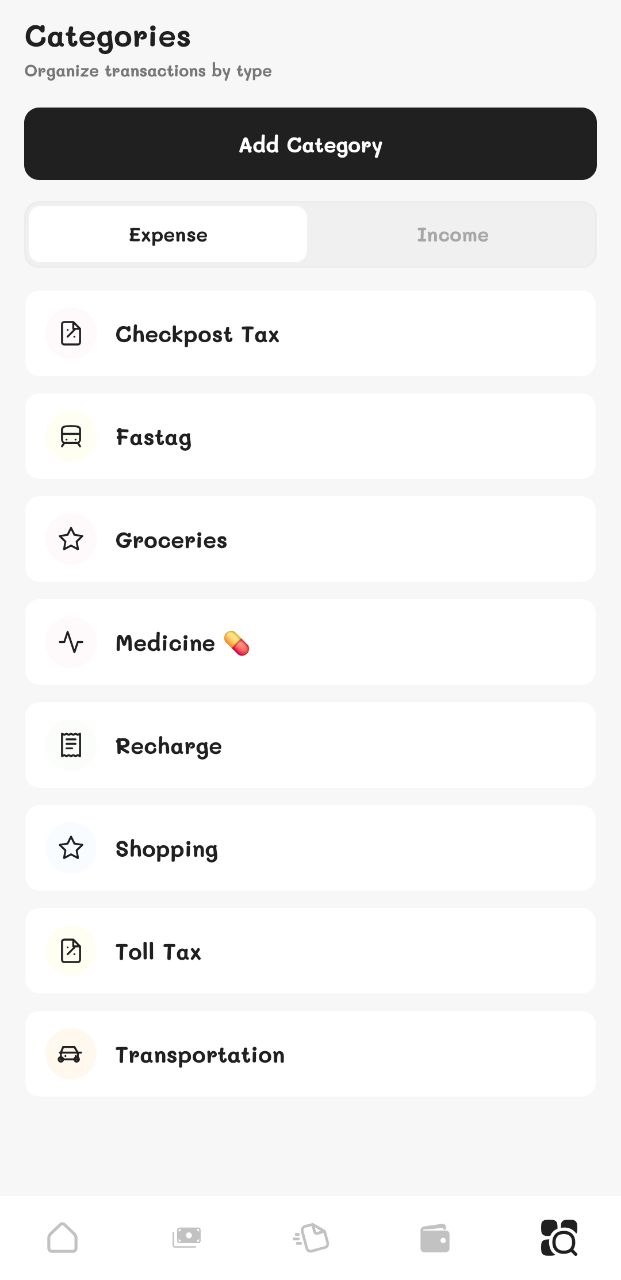
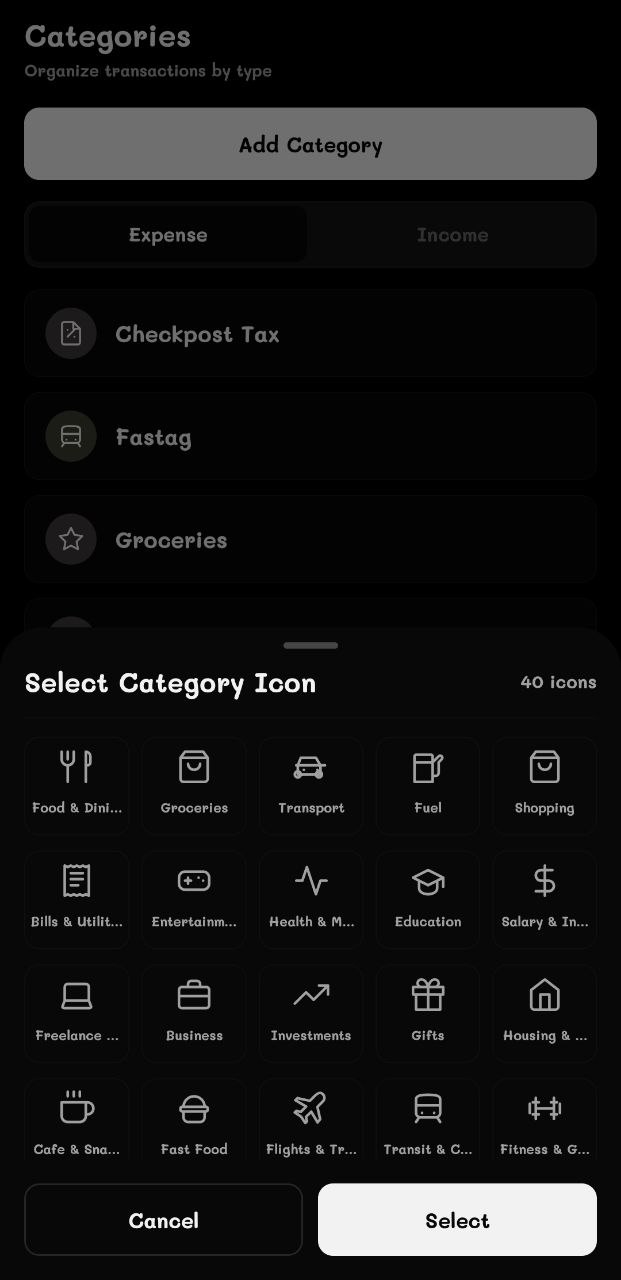
Subtle pastel circular badges distinguish categories at a glance while preserving Expend's timeless black-and-white visual identity.
Versioned JSON backups (v5)
Export or restore your complete financial ledger in human-readable, schema-versioned JSON. Backward-compatible with all earlier versions.
For the ones who'll ask what's underneath
A modern, production-grade Android stack: Kotlin 2.0+, Jetpack Compose Material 3, Room SQLite with automated schema migrations, Kotlin Coroutines & StateFlow, and 25 passing unit tests.
Deterministic data flow with integer minor units
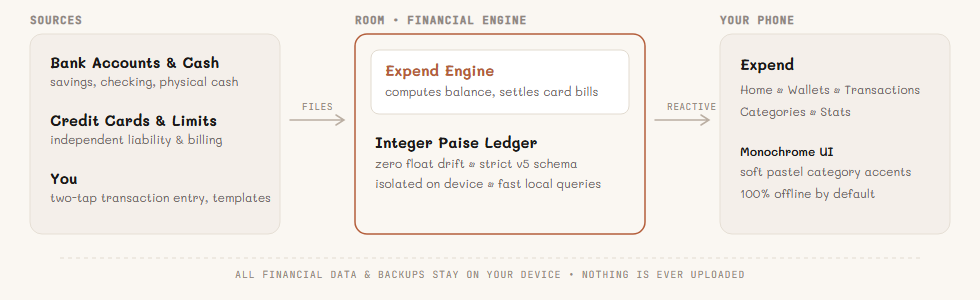
Transactions enter via dedicated forms or templates, flow through the financial engine where currency is computed in integer paise, persist into Room SQLite (v5 schema), and reactively project across Compose UI states.

On your phone in about a minute
Two ways in — download the prebuilt APK directly, or compile the debug build from source in seconds.
You just want to track your spending
Take the latest signed V1 build straight from Releases and install it — Android 8.0 and up, nothing else to set up.
You want to look inside it
Two commands, and about five seconds once Gradle is warm:
git clone https://github.com/apandey-dev/expend.git
cd expend
./gradlew installDebug